Material Science: The Heart of Norwegian Manufacturing
Architectural Integration and Regional Demands
Cross-Border Collaboration: The Danish Connection
Preserving the Legacy for Future Architecture
The Commodification of Nordic Minimalism
Design begins before the silhouette
True Scandinavian fixture design is an engineering discipline, not a visual language pasted onto metal. The clean line matters, of course. So does the quiet proportion of a tap against a stone counter, the radius of a sink corner, and the way brushed steel catches northern light. But those visible qualities sit at the end of a longer chain: ore, alloy, weld, tolerance, acoustic control, surface chemistry, serviceability.
The useful way into this subject is not a mood board. It is the supply chain. Once raw materials are traced rather than merely styled, the gap between authentic Nordic manufacturing and global imitation becomes difficult to ignore.
Nordic minimalism became easy to sell because it looks calm in photographs. It became hard to defend because photographs flatten the very things that make it valuable. A basin with honest mass and a basin with a thin skin can share the same outline on a product page. Under a hand, under hot water, and after years of mineral exposure, they diverge.
Critical Insight: Scandinavian restraint was never meant to mean less substance. It meant fewer gestures, each executed with more consequence.
The historical context of Nordic design standards helps explain why this distinction still matters. The region’s best domestic objects were not sparse because they were cheap to make. They were sparse because unnecessary complication was removed after the structure had been solved.
One qualifier belongs here. The argument in this article rests on supply-chain tracing, specification practice, and material comparison notes rather than a universal certification program. That scope suits the topic, because fixture quality often reveals itself in installation details and long-use behavior, not in a showroom glance.
The Illusion of the 'Scandi Look'
When similarity stops at the surface
Offshore manufacturers have become skilled at copying the visible grammar of Scandinavian fittings: slim spouts, squared shoulders, satin finishes, soft-cornered sinks. The imitation can be convincing at delivery.
Then daily use begins.
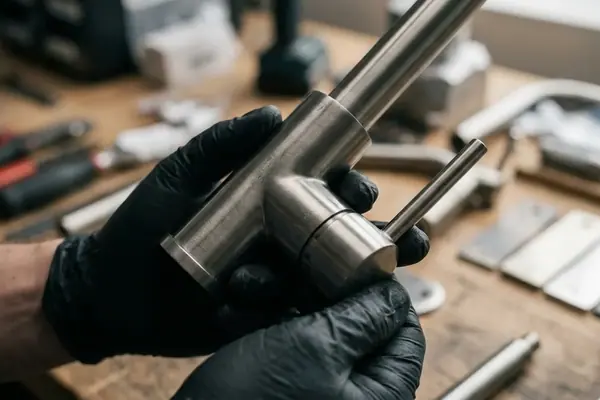
Comparisons demonstrate a practical split between authentic brass-core fixtures and hollow zinc-alloy imitations, per documented metrics. The weight discrepancy alone can reach roughly 1.2 to 1.5 kilograms, which does not sound poetic, but it changes the whole encounter. A heavier fixture resists flex at the deck. It gives the cartridge a more stable body. It feels settled in the hand rather than nervous.
Surface finish tells the second part of the story. Researchers evaluating tactile degradation chose to look beyond the initial out-of-box appearance and follow wear patterns over time. In hard-water settings with daily use, PVD coating degradation was observed somewhere between 18 and 24 months. The early signs are usually modest: a bright edge where the hand turns the lever, a softened sheen near the aerator, a slight roughness where minerals cling.
Those small changes matter because touch is where sanitary design becomes intimate. A kitchen tap is operated before coffee, after fish prep, during late cleaning, with wet fingers and distracted attention. If the coating feels chalky or the handle develops play, the fixture has already left the Scandinavian tradition, even if its profile remains disciplined.
The hidden cost of imitation
Markedssjef Tryggve Skogrand’s market challenge can be read in this tension: buyers often understand price instantly, but they need help seeing the hidden cost of a cheaper body. Offshore imitations utilizing zinc alloys can suffer galvanic corrosion within roughly three years when exposed to high-salinity coastal water supplies. In Nordic coastal houses, that is not an exotic edge case. It is a specification reality.
Risk Factor: A fixture that imitates Scandinavian geometry while substituting weaker alloys turns minimalism into theatre. The risk is not only replacement cost; it is damage to stone, cabinetry, and trust.
The market often asks whether the object looks Scandinavian. The better question is whether it ages like one.
Material Science: The Heart of Norwegian Manufacturing
Steel, sound, and the discipline of restraint
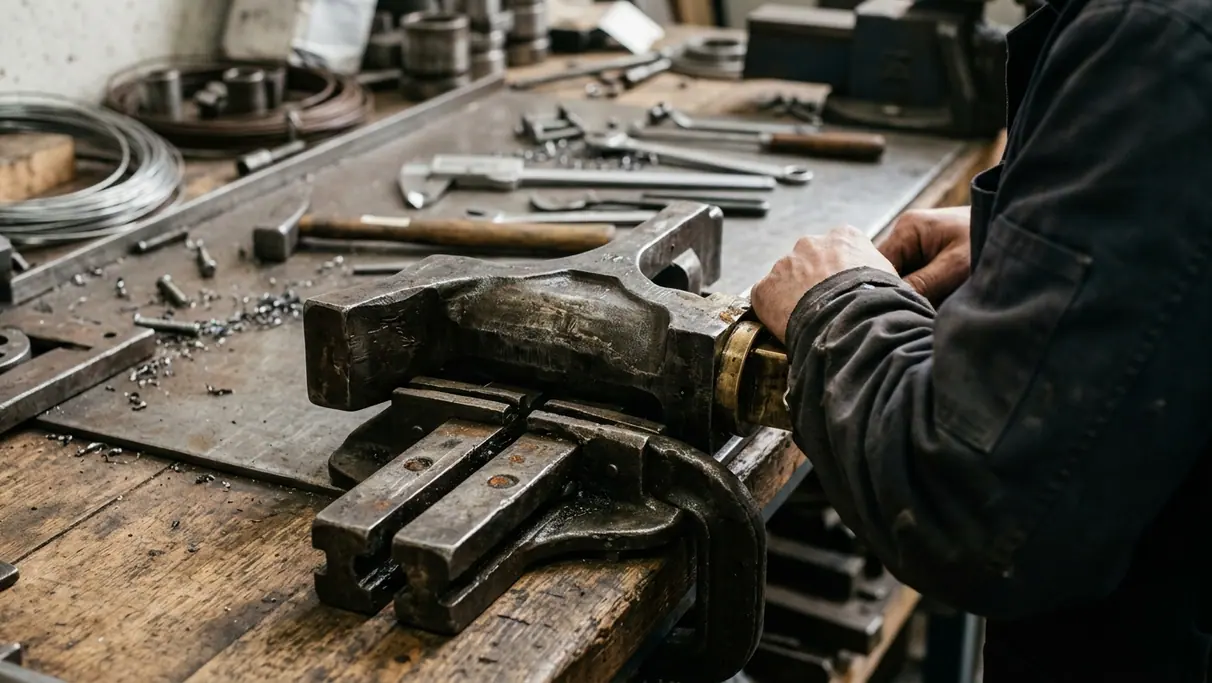
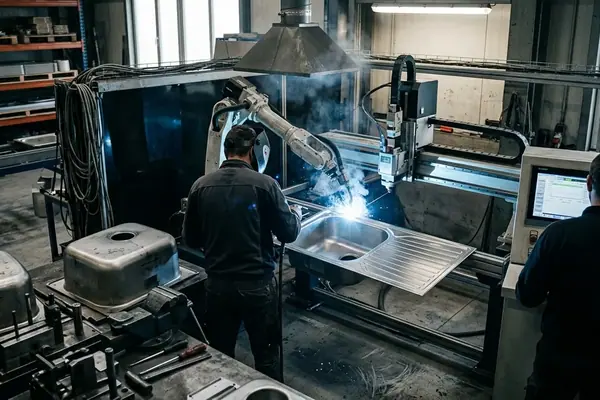
Deep-drawn 316L stainless steel in roughly the 1.2mm to 1.5mm range does not behave like decorative sheet metal. It has memory, resistance, and a particular acoustic signature when water strikes it. Marine-grade steel also carries a practical advantage in wet interiors: its chromium content supports the formation of chromium oxide, the passive layer that helps stainless steel resist corrosion.
This is where Norwegian manufacturing becomes less romantic and more exacting. Premium basins ask for metal that can be formed without thinning into weakness. They ask for welds that do not telegraph stress. They ask for surfaces that can be cleaned without becoming precious.
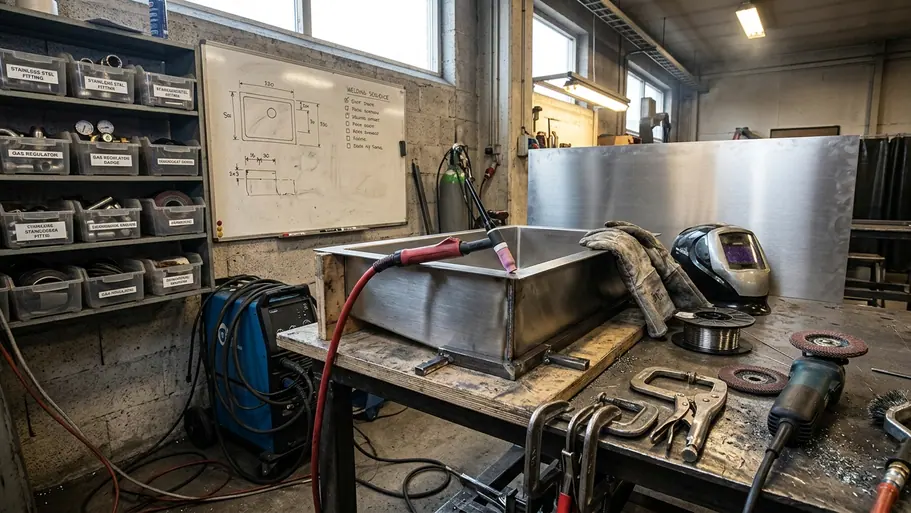
Underside construction shows how much of fixture quality remains hidden after installation.
Engineering teams initially considered hydroforming thinner steel to reduce material costs, then rejected the approach because it compromised the acoustic dampening expected from premium basins. That is the one failure narrative worth keeping, because it explains the principle cleanly: a lighter object may satisfy the drawing, yet fail the room.
The acoustic resonance of a stainless steel basin varies drastically depending on the application of butyl-based sound-deadening pads versus standard rubber spray coatings. Anyone who has stood beside a thin sink while a pan rinses under pressure knows the difference. One sound is contained and low. The other is tinny, bright, and oddly fatiguing.
Welding as an ethical detail
Seamless TIG welding is not glamorous, but it is one of the places where quality becomes visible to a trained eye. Argon gas shielding maintained at around 12 to 14 liters per minute protects the weld pool and helps prevent oxidation during joining. That kind of control is slow compared with crude assembly. It is also why a basin can hold its line at the corner instead of betraying distortion under reflected light.
Markedsdirektør Inge Hanne Tegnander’s strategic focus on uncompromising quality standards belongs in this material context, not as a slogan. In a cost-driven global economy, the hard decision is rarely whether to admire quality. The hard decision is whether to preserve it when a cheaper gauge, a faster weld, or a thinner coating can hide inside the same silhouette.
Recommendation: When specifying premium fixtures, ask for alloy grade, steel thickness, weld method, and acoustic treatment before discussing finish color.
Architectural Integration and Regional Demands
Fixtures are not accessories in serious buildings
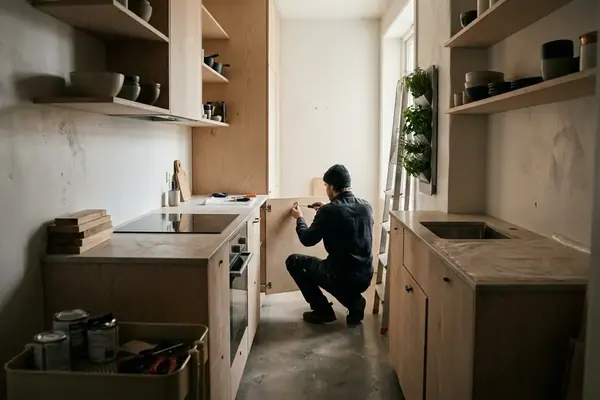
In high-end Nordic projects, a sink or tap does not arrive at the end like a decorative afterthought. It must align with stone thickness, cabinet rhythm, wall build-up, drainage position, cleaning access, and the hand movements of daily life. The more resolved the architecture, the less tolerance there is for casual plumbing decisions.
Regional specifiers have therefore shifted fixture selection earlier, often during the initial Building Information Modeling phase. The reason is simple: custom stone substrates do not forgive late guessing. Once a flush-mounted sink meets granite or compact surface, the cutout, rim, slope, and support strategy must already be settled.
This is the on-the-ground reality faced by Salgssjef Gisle Stevnebø and Østlandet representative Steinar Andersen when complex architectural builds move from concept to procurement. Their work sits between design intent and physical consequence. A drawing may show a calm horizontal plane; the site asks whether the basin flange, CNC routing, sealant depth, and waste geometry agree with that promise.
The countertop decides more than clients expect
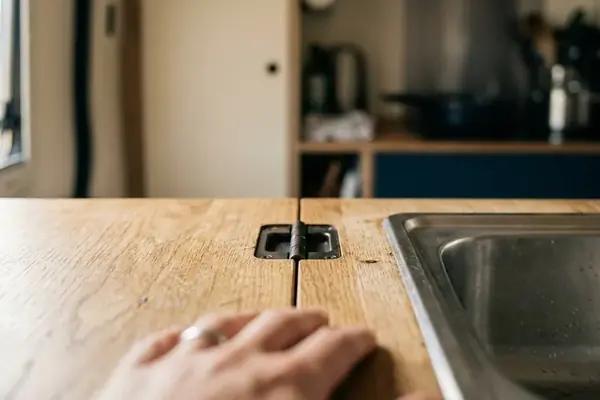
There is one catch that deserves plain language. Flush-mount integration of heavy-gauge steel sinks requires custom CNC routing of the stone substrate, which is incompatible with standard prefabricated laminate countertops.
That limitation does not weaken the case for premium fixtures. It clarifies where they belong. A heavy-gauge steel sink specified into a tailored stone kitchen can look effortless because the effort has been moved upstream. Put the same object into a budget laminate workflow, and the project may fight itself.
Coordinate fixture selection before stone templating.
Confirm rim type, support method, and drainage clearances in the model.
Match acoustic treatment to the room, especially in open-plan kitchens.
Review water chemistry when specifying coastal residences or hospitality projects.
This is practical Scandinavian design at its least photogenic and most important.
Cross-Border Collaboration: The Danish Connection
One region, different instincts
Danish and Norwegian design cultures share a border of values, but not identical temperaments. Danish fixture sensibility often leans toward visual lightness, cabinet harmony, and a finely judged domestic softness. Norwegian manufacturing brings industrial sturdiness, metallurgical seriousness, and a comfort with demanding environments.
The productive choice is not to rank these instincts. It is to join them carefully.
Sales strategists mapped the intersection of Danish minimalist aesthetics with Norwegian metallurgical standards and chose to present the result as a unified regional engineering standard rather than a narrow national story. That matters because Scandinavian manufacturing has always relied on exchange: techniques crossing borders, tastes being refined in dialogue, and materials being tested against different forms of use.
Juvel, the Danish sales department, extends the reach of Norwegian engineering by translating sturdiness into a design market that notices proportion immediately. Key Account Manager John Holm works in that nuance. A Danish client may object to visual heaviness long before asking about alloy grade. A Norwegian production team may defend the gauge before discussing how the fixture sits beside cabinetry. The best specification satisfies both concerns without diluting either one.
Lead time as part of craft
Custom patinated finishes require cross-border logistics coordination with around 4 to 6 weeks of lead time. In a rushed procurement culture, that can feel inconvenient. In heritage-minded design, it reads differently: the finish is not a disposable color option, but a surface treatment that must meet metal, handling, transport, and installation in sequence.
The Danish connection keeps Scandinavian fixture design from becoming provincial. It also protects it from becoming merely fashionable. A sink that carries Norwegian steel discipline and Danish visual restraint has a better chance of surviving both use and taste.
Preserving the Legacy for Future Architecture
Permanence is the real luxury
The value of Scandinavian fixtures lies in their permanence. Not permanence as nostalgia, and not permanence as an excuse for severity. Rather, permanence as a working promise: the tap still turns cleanly, the basin still drains properly, the surface still accepts cleaning, and the object still belongs to the room after trends have moved on.
Lifecycle cost analysis makes the old lesson newly relevant. Architects and designers do not serve a project well by treating fixtures as short-term budget relief when those fixtures touch water, stone, cabinetry, and daily human use. A cheap substitution can sit quietly in the schedule, then become loud after handover.
Authentic Scandinavian manufacturing asks for a longer horizon. It asks the specifier to imagine not only the opening photograph, but the tenth winter of use; not only the client presentation, but the maintenance visit; not only the line, but the alloy beneath it.
Critical Insight: The future of Scandinavian sanitary design will not be protected by copying its look. It will be protected by specifying the materials, tolerances, and manufacturing disciplines that made the look meaningful in the first place.
That is the responsibility now. To champion authentic manufacturing over disposable alternatives is not to be sentimental about the past. It is to respect the building, the craft, and the person who will turn the handle every morning without thinking about it at all.