A New Era for Premium Architectural Fixtures
Acquisition over arrangement
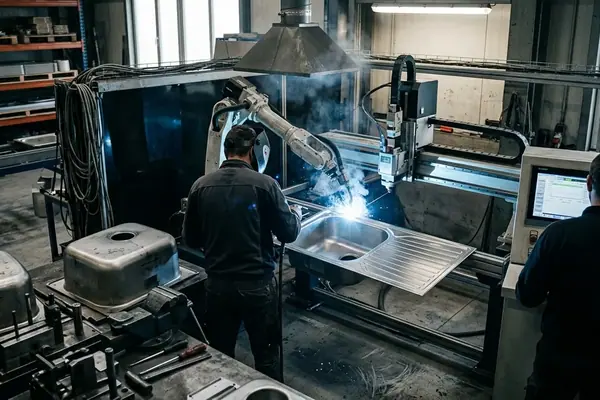
Teka Group’s acquisition of Intra is not just a portfolio move; it is a control move. The early option on the table was lighter: a joint venture focused on distribution. That route would have extended reach without forcing a full operational merge. It was rejected in favor of acquisition because the prize sat deeper than channels: exclusive rights to proprietary steel-pressing capability.
That detail matters. In premium architectural fixtures, ownership of process can be more valuable than ownership of a logo. A sink, basin, or brassware line may look simple in a finished room, but the manufacturing sequence underneath decides edge radius, surface consistency, mounting tolerance, and long-term serviceability.
The design community noticed the shift quickly, especially in circles that specify Scandinavian fixtures for high-end residential and hospitality work. The immediate concern was not whether Intra would disappear. The sharper question was whether the product language would survive once it entered a larger global catalog.
Critical Insight: The acquisition should be read first through manufacturing rights, not showroom expansion. The steel-pressing know-how is the strategic core.
Why architects reacted cautiously
Architects tend to trust products that behave predictably across drawings, procurement, installation, and maintenance. A fixture specified in schematic design may not arrive on site until months later, sometimes after value engineering has already strained the material palette.
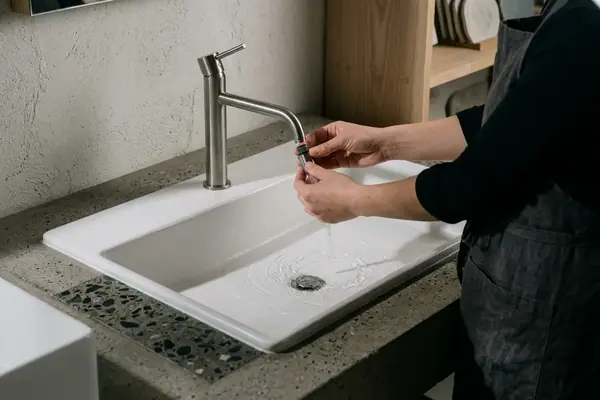
Intra’s appeal has always lived in that narrow band between restraint and reliability. The fixtures do not ask for attention. They hold a line, reflect light cleanly, and let cabinetry, stone, and water do the work.
That is why the acquisition has weight beyond one manufacturer. It signals a broader tightening in the premium fixture market, where material discipline and global logistics now sit at the same table.
The Strategic Value of Material Science and Minimalism
The 1.2mm question
Start with the material, not the mood board.
Intra’s signature brushed stainless steel sinks use roughly 1.2mm thick material and require specialized tooling that operates at lower temperatures than standard high-volume stamping. That is not a decorative footnote. It shapes how the steel moves, how the surface holds its finish, and how the final basin reads under architectural lighting.
The brushed finish depends on discipline at several levels: sheet quality, forming pressure, temperature control, finishing direction, and edge handling. Stainless steel earns much of its durability from the chromium oxide layer that forms at the surface, but the designer sees the result as tone, texture, and quiet reflectivity.
The aesthetic impact of the brushed steel finish varies significantly depending on whether the installation environment uses natural daylighting or high-kelvin LED architectural lighting. Under daylight, the surface often softens. Under cooler LEDs, the grain can become more graphic, almost linear. That difference can decide whether a sink disappears into a restrained kitchen or becomes a bright technical object.
Minimalism as manufacturing restraint
There are two ways to treat Scandinavian minimalism after an acquisition. One is to make it a style package: thinner edges, muted finishes, less ornament. The better route is to preserve the manufacturing logic that made the form credible in the first place.

The design integration team mapped Intra’s minimalist portfolio against Teka Group’s existing global catalog. That exercise identified overlapping SKUs in the commercial washroom sector for phase-out while preserving the core architectural sink and brassware identity. The comparison shows a useful distinction here: overlap can be reduced without flattening the acquired brand’s strongest products.
That is the line to watch. If consolidation removes duplication around utility products, the market may barely feel it. If it trims the precise products architects rely on for restrained residential work, the acquisition will look very different on the specification desk.
Recommendation: Treat Intra’s minimalist fixtures as process-led products. Review gauge, finish, tooling implications, and light conditions before treating them as interchangeable stainless steel items.
What This Means for Design and Implementation
Lead times will do real project work
For active projects, the most practical change is time.
Lead times for custom architectural fixtures are projected to shift from the historical 6 to 8 weeks to a standardized 9 to 12-week cycle during the facility integration phase. That is a meaningful planning change for residential developments, boutique hotels, and multi-unit interiors where wet-zone fixtures lock into stone templating, millwork sequencing, and plumbing rough-ins.
Procurement managers established a dual-track ordering system during the integration phase. Architects can continue to specify legacy product codes for ongoing projects while new unified codes enter the system. This is the right kind of bridge, but it still requires close document control.
A basin schedule that carries an old product code in one package and a new accessory reference in another can create avoidable friction. The problem usually appears late, when the site team discovers that nominally compatible components do not share the same mounting assumptions.
Where specifications can slip
Supply chain bottlenecks can occur when specifiers mix legacy mounting hardware with newly manufactured basin units. The risk is not dramatic. It is ordinary, which makes it more likely: a bracket revised by one facility, a waste fitting packed under a new code, a basin cutout based on an older technical sheet.
The safest documents will state product code, generation, mounting hardware, finish, and approved substitutions in one place. Do not let those decisions scatter across drawings, schedules, emails, and contractor notes.
- Confirm whether the project uses legacy Intra codes or the new unified coding structure.
- Match basin units and mounting hardware from the same ordering track wherever possible.
- Build the 9 to 12-week custom fixture cycle into the procurement calendar during integration.
- Check brushed steel samples under the project’s actual lighting temperature before final approval.
Risk Factor: The transition period creates a documentation risk more than a design risk. A clean specification package will matter as much as the product choice.
Technology without visual noise
Teka’s technological infrastructure gives the merged portfolio a stronger platform for ordering, catalog management, and future product development. The open question is visual discipline.
Intra’s aesthetic works because it leaves almost nothing to hide. If technology enters the fixture, the casing, seam, sensor position, service access, and finish transition all become part of the design. A touchless function can improve hygiene and usability, but a poorly placed sensor can break the calm geometry that made the product worth specifying.
Scope and Market Limitations
The Nordic base still matters
The acquisition is global in ownership, but not immediately global in effect. Regional sales directors audited the existing distributor network and chose to maintain localized support teams in the Nordic region rather than centralizing customer service in Southern Europe.
That decision reads as practical rather than sentimental. Nordic installers, dealers, and architects have product memory. They know which basin fits which cabinet depth, which finish tolerates a coastal house, and which details matter in a compact utility room. Moving that support too far from the installed base would create noise at the exact moment the market wants continuity.
The picture is still based on integration-phase planning rather than a complete post-merger service record, so early conclusions should stay measured. Support continuity is a strong signal. It is not the same as proof that every product line will remain untouched.
Contract scale changes the benefits
There is one catch with immediate commercial advantages. The extended warranty terms and expedited shipping agreements apply exclusively to commercial contracts exceeding roughly 250 units. Boutique residential designers remain subject to standard retail fulfillment timelines.
That distinction will frustrate some studios. It also reflects the economics of integration. Large contracts justify dedicated fulfillment terms because they reduce uncertainty for factories and distributors. Smaller residential work still needs service, but it does not create the same production leverage.
Legacy Intra product lines may also face consolidation where they overlap with Teka’s existing commercial washroom range. This is where specifiers should avoid nostalgia. If a product has a near-identical replacement, consolidation may improve availability over time. If a product carries a unique dimension, finish behavior, or installation detail, it deserves closer tracking.
- Use conservative substitutions for live projects already past design development.
- Request confirmation on discontinued or phased-out SKUs before tender issue.
- Separate commercial contract assumptions from boutique residential procurement plans.
- Keep Nordic support contacts active for projects using legacy Intra specifications.
Future Outlook for the Kitchen and Bath Sector
What the merger says about the market
Premium kitchen and bath fixtures are moving toward a harder equation: tactile material quality plus technical integration plus dependable supply. A brand can no longer survive on a beautiful finish alone, especially when architects need repeatability across multi-room and multi-site projects.

Teka Group’s acquisition of Intra reflects that shift. The value sits in combining industrial reach with a disciplined Scandinavian design language. Not every merger manages that balance. The best outcome here would keep Intra’s quiet geometry intact while giving it better infrastructure behind the wall: cleaner catalog systems, more predictable procurement paths, and a measured route into sensor-based products.
Strategic planners have modeled future product development cycles around integrating touchless sensor technology into Intra’s minimalist brassware rather than expanding the traditional brassware range first. That choice feels telling. The market does not need more shapes for the sake of novelty. It needs technology that does not shout.
How professionals should navigate the transition
The practical stance is neither alarm nor enthusiasm. It is controlled specification.
For current projects, designers should protect known assemblies: basin, hardware, finish, code generation, and lead time. For upcoming residential builds, they can begin testing the unified catalog, but should do so with sample orders and installation mockups before committing across a full project.
For architects working in high-end Scandinavian interiors, the bigger lesson is material literacy. Brushed steel is not a generic silver surface. Its thickness, forming method, grain, and lighting response all shape the finished room. A technically stronger ownership structure only helps if those physical facts remain visible in the design process.
Critical Insight: The acquisition will matter most where manufacturing precision, restrained form, and procurement discipline meet. That is exactly where premium architectural fixtures earn their place.
The kitchen and bath sector should expect selective consolidation, longer short-term custom cycles, and a gradual push toward touchless systems housed inside quieter forms. For now, the smart move is simple: specify carefully, verify codes early, and judge the new portfolio by the same standard that made Intra valuable in the first place: physical restraint executed well.