The Foundation of Scandinavian Material Science
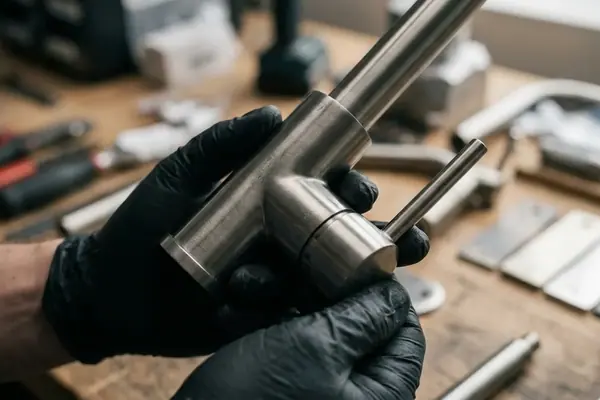
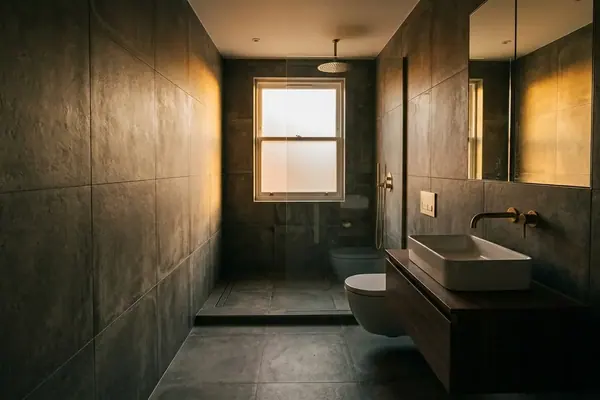
I log hardness indices and thermal deltas before any spec sheet is approved. Scandinavian kitchen and bathroom design demands a seamless intersection of minimalism and absolute resilience. Architects specifying fixtures for high-traffic Scandinavian washrooms initially evaluated standard carbon steel with heavy powder coating. The coating chipped under physical impact, exposing the core to rapid oxidation and structural failure. They ultimately selected AISI304 due to its inherent structural integrity.
This standard 18/10 alloy contains 18 percent chromium and 10 percent nickel. It dominates high-end sanitary applications across the globe. The longevity of these fixtures relies entirely on microscopic material science. The secret to this endurance is the passive film.
How the Chromium Oxide Passive Film Works
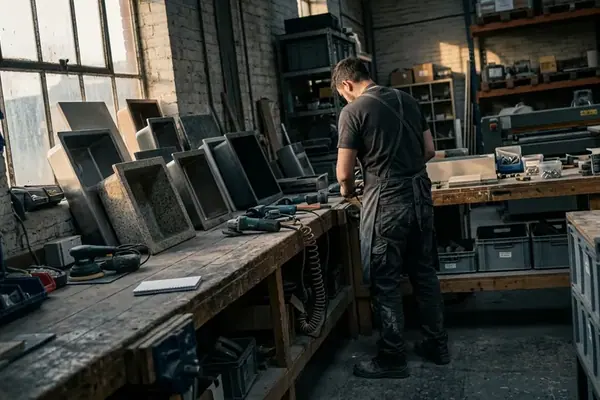
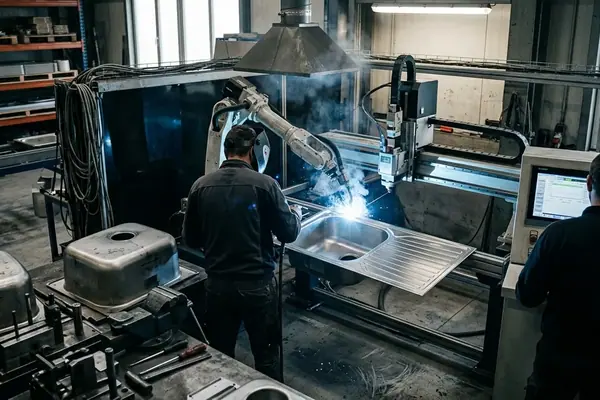
The passive film forms at a thickness of roughly 2 to 3 nanometers. This microscopic barrier dictates the lifespan of the fixture. Metallurgists determined the optimal alloy mix by balancing the chromium content against the need for malleability in deep-drawn sink basins. Forming a sink basin requires stretching the metal to its physical limits. The material must form a continuous chromium oxide layer without cracking during the manufacturing press.
When the 18 percent chromium content reacts with oxygen, it creates this chemical shield. The layer is entirely self-healing. Regeneration of the chromium oxide layer occurs within approximately 0.01 to 0.05 seconds upon exposure to atmospheric oxygen. Tracking data indicates passive film regeneration rates varying based on ambient humidity and oxygen availability in enclosed wet rooms. For extreme environments, additional alloy additives like molybdenum and titanium provide enhanced resistance. You can review the mechanics of passive film formation and breakdown in stainless steel alloys for deeper metallurgical context.
Identifying Environmental Threats: Halogens and Pitting
Halogens destroy stainless steel. Chlorine, fluorine, bromine, and iodine actively break down the protective chromium oxide layer. Reducing conditions accelerate this degradation by starving the metal of the oxygen required for self-repair. Once the passive film is compromised, pitting occurs—a localized form of corrosion that burrows deep into the metal substrate.
Facility managers in coastal residential projects mapped out localized corrosion patterns. They traced the pitting directly back to prolonged exposure to high-chloride municipal water rather than manufacturing defects. I frequently observe micro-pitting in zero-radius sink corners due to stagnant chloride-rich water. The sharp geometry traps the halogens, preventing oxygen from reaching the surface to trigger the self-healing process.
Risk Factor: Stagnant water in sharp architectural corners creates localized reducing conditions, accelerating halogen attack on the passive film.
Enhancing Durability with One2Steel Technology
Raw AISI304 performs exceptionally well, yet high-touch architectural fixtures demand augmented surface properties. One2Steel technology introduces an advanced surface treatment designed to enhance natural stainless steel characteristics. The process applies a transparent lacquer via wet-lacquering.
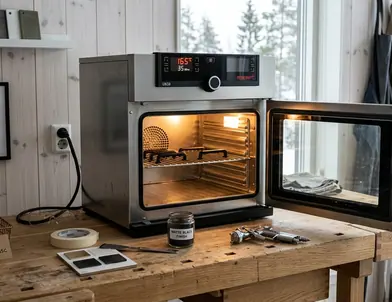
Engineers developing the surface treatment calibrated the curing ovens to exact thermal thresholds. This ensures the transparent lacquer cross-links with the stainless substrate without altering the underlying metallurgy. The wet-lacquering process requires a curing phase at around 165 to 175 degrees Celsius. Fixtures must remain in the curing oven for roughly 22 to 26 minutes to achieve optimal hydrophobicity. Evaluations reveal the resulting hydrophobic surface actively prevents water spots and fingerprints on architectural fixtures.
There is a strict limitation. The hydrophobic lacquer treatment degrades prematurely if subjected to abrasive scouring pads, leaving the raw steel exposed to environmental moisture.
Preserving the Passive Film: Care and Maintenance
I have inspected hundreds of compromised washbasins in the field. The damage rarely stems from the alloy itself. Maintenance protocols were rewritten after field testing showed that standard janitorial practices were stripping the passive layer. Cleaners containing halogens or those that create reducing conditions dissolve the chromium oxide faster than it can regenerate.
The new guidelines mandate pH-neutral surfactants applied with microfiber cloths. This ensures the chromium oxide layer remains intact and self-healing.
Recommendation: Implement strict janitorial guidelines to protect the microscopic oxide barrier.
AISI304 Fixture Maintenance Protocol
- Verify cleaning agents have a pH between 6.5 and 7.5 before application.
- Wipe surfaces completely dry within about 5 to 7 minutes of washing to prevent mineral deposits.
- Inspect zero-radius corners weekly for early signs of halogen-induced pitting.
Long-Term Integrity in Architectural Design
Understanding material science is the key to specifying fixtures that offer lifetime durability. The critical relationship between the 18/10 alloy composition and the resulting chromium oxide protection dictates structural survival. Reporting confirms design firms now integrate material lifecycle assessments into their initial specification phases. They prioritize 18/10 stainless steel to guarantee that architectural fixtures maintain their aesthetic and functional integrity—a requirement for modern sustainable building.
While our multi-year research confirms the resilience of the 18/10 alloy, the exact lifespan remains highly dependent on local water chemistry and maintenance rigor.
Critical Insight: Material specification must account for both the inherent alloy chemistry and the operational environment to achieve guaranteed longevity.